
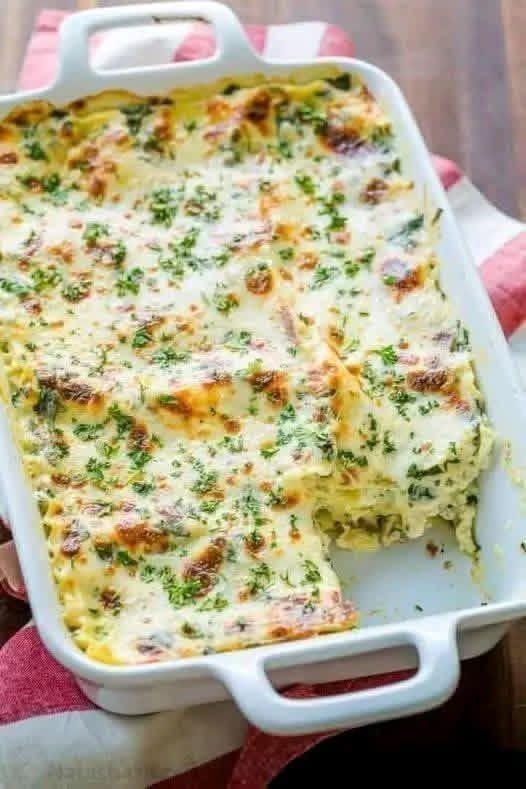
This recipe transforms the classic comfort food into a low-carb, gluten-free dish that doesn’t skimp on flavor. By replacing traditional pasta with thinly sliced zucchini or eggplant, you get all the cheesy, savory layers of traditional lasagna without the carb-heavy noodles. The result is a hearty, protein-packed meal perfect for keto, diabetic-friendly, or simply healthier eating.
For the “Noodle” Layers
-
3 to 4 medium zucchinis, sliced lengthwise into ¼-inch planks (or 1 large eggplant, sliced)
-
1½ teaspoons fine sea salt (for sweating the zucchini)
For the Chicken Filling
-
2½ cups cooked shredded chicken (rotisserie chicken works well)
-
2 cloves garlic, minced
-
1 teaspoon Italian seasoning
-
Salt and pepper, to taste
For the Ricotta Mixture
-
15 ounces whole milk ricotta cheese
-
1 large egg, lightly beaten
-
½ cup grated Parmesan cheese, divided
-
2 tablespoons fresh parsley, chopped (or 2 teaspoons dried)
For the Sauce and Cheese Layers
-
2 cups low-carb marinara sauce (no-sugar-added)
-
3 cups shredded low-moisture mozzarella cheese, divided
-
2 tablespoons olive oil
-
Optional: 4 ounces baby spinach, sautéed and squeezed dry
Preparing the Vegetable “Noodles”
If you are using zucchini, trim the ends and slice them lengthwise into planks about a quarter-inch thick. Lay the slices in a single layer on paper towel-lined baking sheets and sprinkle them evenly with one and a half teaspoons of salt. Let them sit for twenty to twenty-five minutes to draw out excess moisture, then pat them thoroughly dry with paper towels. For extra crispness, you can bake the salted planks on a wire rack at 400°F for eight to ten minutes before assembling.
If you are using eggplant, you can either follow the same salting and drying process or brush the slices with olive oil and roast them at 400°F until golden brown, which adds a lovely smoky depth.
Making the Fillings
In a medium bowl, combine the ricotta cheese, beaten egg, half of the grated Parmesan (reserve the other half for topping), parsley, minced garlic, Italian seasoning, and a pinch of salt and pepper. Mix until smooth and set aside. If you are using spinach, fold it into the ricotta mixture for an extra layer of green.
In a separate small bowl, toss the shredded chicken with a little salt, pepper, and additional Italian seasoning if desired. This ensures the chicken is flavorful throughout the layers.
Preparing the Sauce
In a small saucepan over medium heat, warm the olive oil and sauté the minced garlic until fragrant, about one minute. Add the low-carb marinara sauce, oregano, basil, and salt. Let it simmer for twelve to fifteen minutes to thicken and deepen the flavors. If you prefer a meatier sauce, you can brown a half-pound of ground Italian sausage or ground turkey with the garlic before adding the marinara.
Assembling the Lasagna
Preheat your oven to 375°F (190°C) and lightly grease a 9×13-inch baking dish with olive oil or nonstick spray.
Start with a thin layer of sauce on the bottom of the dish to prevent sticking. Add a single layer of the prepared zucchini or eggplant planks, overlapping them slightly to cover the surface. Spread a layer of the ricotta mixture over the vegetables, followed by a generous sprinkle of mozzarella and a portion of the shredded chicken. Add another layer of sauce, then repeat the layers—vegetables, ricotta, cheese, chicken, sauce—until all the ingredients are used, finishing with a final layer of sauce on top.
Sprinkle the remaining mozzarella and the reserved Parmesan cheese over everything. For a golden, bubbly finish, you can place the dish under the broiler for a minute or two at the end of baking.
Baking and Serving
Cover the dish with foil and bake for thirty to thirty-five minutes. Then remove the foil and bake for an additional ten to fifteen minutes, until the cheese is melted, bubbling, and starting to brown in spots. Let the lasagna rest for at least ten minutes before slicing—this allows the layers to set, ensuring clean, neat portions.
Serve the lasagna hot, with a simple green salad dressed in a light vinaigrette to balance the richness.
Storing and Reheating
Store leftovers in an airtight container in the refrigerator for up to four days. This lasagna also freezes beautifully for up to three months—simply cover the unbaked or fully baked and cooled lasagna tightly in plastic wrap and foil, then thaw overnight in the refrigerator before reheating. To reheat, warm individual portions in the microwave or return the entire dish to a 350°F oven for fifteen to twenty minutes until heated through.
A Few Grace Notes
This recipe invites you to make it your own. If you are not a fan of zucchini or eggplant, you can use thinly sliced chicken breasts as the “noodle” layers—they will cook through during baking and add even more protein. For a dairy-free version, substitute the ricotta with a cashew-based ricotta and use dairy-free mozzarella and Parmesan.
If you have extra time, try roasting the zucchini planks before assembling the lasagna—it adds a wonderful depth of flavor and prevents the vegetables from releasing too much liquid during baking. For added flavor, sprinkle a pinch of red pepper flakes into the sauce for a subtle heat.
This low-carb chicken lasagna is proof that you do not have to give up your favorite comfort foods to eat well. With its rich, cheesy layers, its tender vegetable “noodles,” and its savory chicken filling, it is a satisfying, nutritious meal that the whole family will love—whether they are counting carbs or not.