
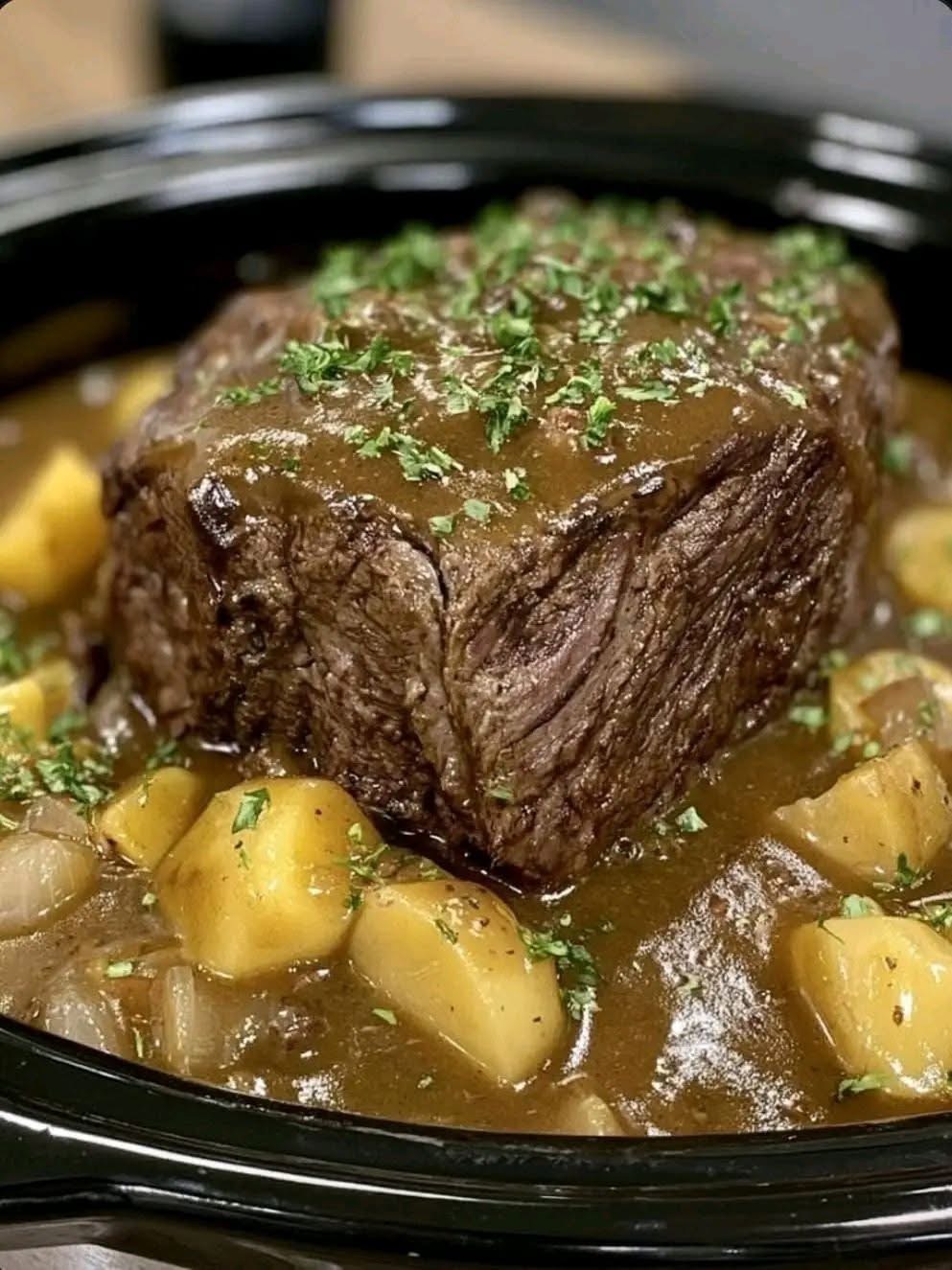
Some dishes feel like a warm hug on a plate, and this Amish pot roast is one of them. Rooted in the tradition of simple, hearty cooking, it transforms a humble cut of beef into something meltingly tender and deeply flavorful. While the exact recipe can vary from kitchen to kitchen, the heart of it lies in the long, slow braise that fills your home with the most comforting aroma.
For the Pot Roast
-
3 to 4 pounds chuck roast (or bottom round roast)
-
2 tablespoons vegetable or olive oil, for searing
-
2 large yellow onions, sliced into thick rings
-
3 cloves garlic, minced (optional, for extra savory depth)
-
1 cup strong brewed coffee (the secret to the rich, dark gravy)
-
¼ cup soy sauce (adds umami and depth)
-
2 tablespoons Worcestershire sauce
-
1 cup beef broth or water
-
1 teaspoon salt
-
½ teaspoon black pepper
-
1 teaspoon dried oregano or thyme
-
2 bay leaves
For the Gravy (Optional but Recommended)
-
2 tablespoons cornstarch
-
3 tablespoons cold water
The Soul of the Dish
Many of the most popular versions of this dish have a surprising secret: a braising liquid made from a cup of strong brewed coffee, a splash of soy sauce, and a little Worcestershire sauce. This combination might sound unconventional, but it creates a rich, savory gravy with incredible depth, an earthy flavor that is both robust and balanced. It is the perfect example of how Amish cooking can take simple ingredients and create something truly memorable.
However, like any classic recipe passed down through generations, there are variations. Some versions lean on a simpler base of beef broth with tomato juice or crushed tomatoes, creating a lighter, more traditional gravy. Others get their richness from a mustard and brown sugar rub, which adds a lovely tangy sweetness.
Getting Started
Before the long cooking begins, the most important step is searing the roast. Pat the chuck roast dry with paper towels—this is essential for achieving a good sear. Season it generously on all sides with salt and pepper, rubbing the seasonings into the meat.
Heat the oil in a large, heavy skillet or Dutch oven over medium-high heat. When the oil is shimmering, add the roast and sear it for about four to five minutes per side, until a deep, dark brown crust forms. Do not rush this step—the caramelized crust is the foundation of the rich flavor that will develop during the long braise. Once seared, transfer the roast to a plate and set it aside.
Building the Braise
If you are using the same Dutch oven for the entire cooking process, reduce the heat to medium and add the sliced onions to the pan. Cook them for about five to seven minutes, stirring occasionally, until they have softened and begun to caramelize, scraping up any browned bits from the bottom of the pan. Stir in the minced garlic and cook for another minute until fragrant.
Return the seared roast to the pan, placing it on top of the onions. If you are using a slow cooker, transfer the onions to the bottom of the slow cooker first, then place the roast on top.
Pour the brewed coffee, soy sauce, Worcestershire sauce, and beef broth over and around the roast. Add the bay leaves and dried herbs, ensuring the liquid comes about halfway up the sides of the meat.
The Long, Slow Cook
For the slow cooker method, cover the pot and cook on LOW for eight to nine hours, or on HIGH for five to six hours. The roast is ready when it is fall-apart tender and shreds easily with a fork.
For the oven method, cover the Dutch oven with its lid and place it in a preheated 300°F (150°C) oven. Braise for three to four hours, until the meat is fork-tender and practically melts when you press it with a spoon. Check occasionally and add a splash of water or broth if the liquid level gets too low.
Resist the urge to lift the lid during cooking—each time you do, you release heat and moisture that the meat needs to become tender.
Finishing the Gravy
Once the roast is tender, carefully transfer it to a cutting board or serving platter and tent it loosely with foil to keep it warm. Remove and discard the bay leaves.
If you prefer a thicker gravy, make a cornstarch slurry by whisking the cornstarch into the cold water until smooth. Pour the slurry into the pan juices and bring the liquid to a gentle simmer over medium heat, stirring constantly until the gravy has thickened to your liking. Taste and adjust the seasoning with additional salt and pepper as needed.
Serving and Storing
Shred the roast with two forks and return it to the gravy, or serve it in thick slices with the gravy ladled over the top. This pot roast is magnificent alongside creamy mashed potatoes, buttered egg noodles, or crusty bread for sopping up every last drop of that incredible sauce. Add a side of roasted carrots, green beans, or a simple green salad to complete the meal.
Leftovers can be stored in an airtight container in the refrigerator for up to four days. Like most braised dishes, this pot roast tastes even better the next day as the flavors meld and deepen. It also freezes beautifully for up to three months—simply thaw overnight in the refrigerator and reheat gently on the stovetop.
A Few Grace Notes
This recipe is wonderfully forgiving and invites you to make it your own. If you prefer a non-coffee version, simply substitute the coffee with an equal amount of beef broth—the dish will still be deeply flavorful. For a more traditional Amish variation, add a cup of tomato juice or crushed tomatoes along with the broth for a lighter, tangier gravy.
For a complete one-pot meal, add peeled and chopped carrots and potatoes to the pot during the final hour of cooking. They will absorb all the savory juices and become tender and flavorful alongside the meat.
If you want a slightly sweeter, tangier version, rub the roast with a mixture of brown sugar, mustard powder, and smoked paprika before searing—this is a beloved variation that adds a lovely caramelized crust.
Amish Pot Roast is more than just a meal—it is a testament to the beauty of simple, patient cooking. With its tender, fall-apart beef and its rich, savory gravy, it is the kind of dish that warms both body and soul, bringing family and friends together around the table for a truly special meal.