
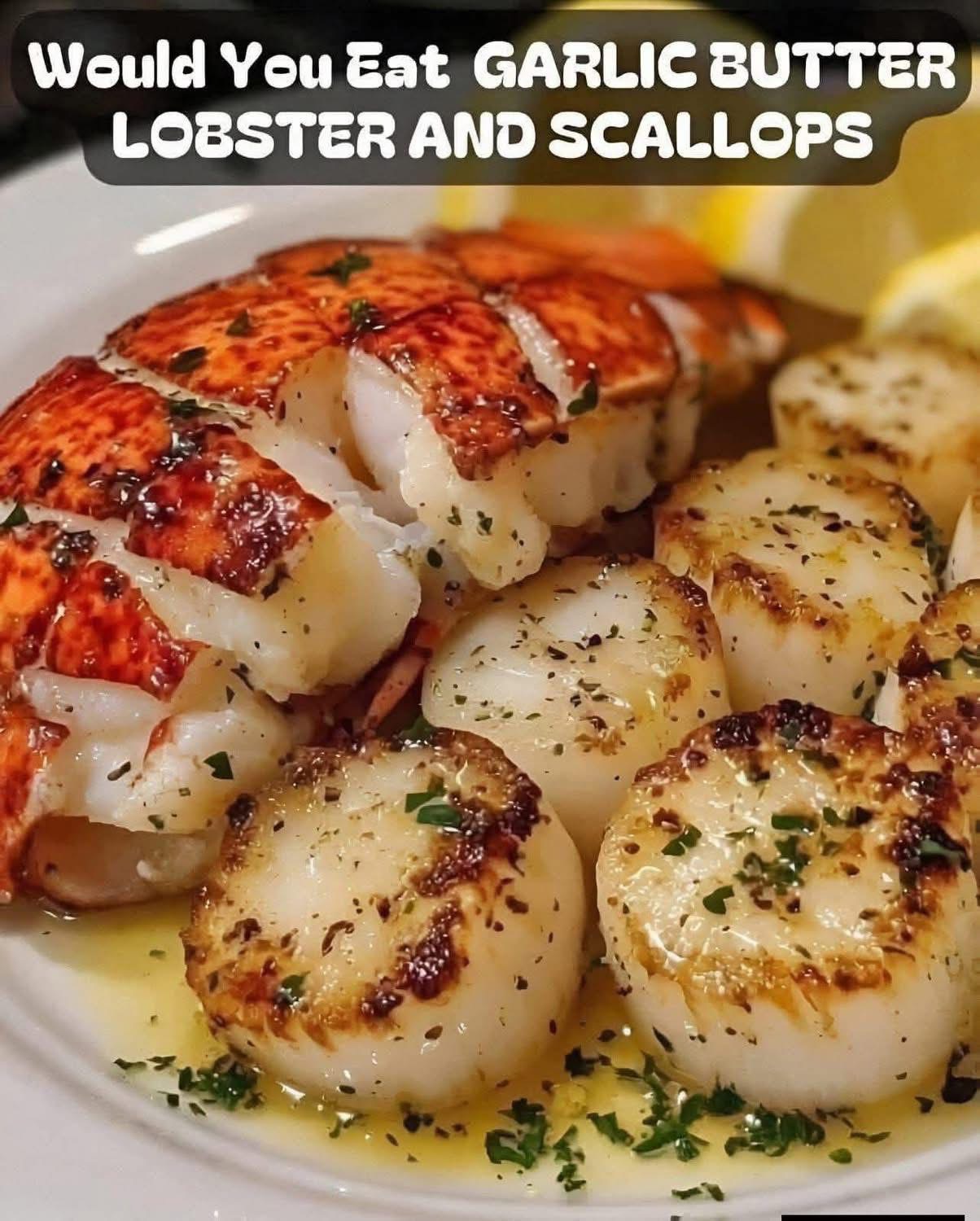
Why You’ll Love This
-
Restaurant‑fancy – impressive enough for date night or holidays
-
Quick cooking – seafood cooks in minutes, so dinner is ready fast
-
Rich garlic butter sauce – deeply flavored with lemon, fresh herbs, and a touch of white wine
-
One pan (mostly) – sear the seafood, then make the sauce right in the same skillet
-
Versatile – serve over pasta, rice, or with crusty bread to soak up every drop of sauce
Ingredients
For the seafood:
-
Lobster tails (fresh or thawed, shell on or removed)
-
Sea scallops (dry‑pack are best – avoid wet‑pack)
-
Olive oil or neutral oil (for searing)
-
Salt and freshly ground black pepper
For the garlic butter sauce:
-
Unsalted butter
-
Fresh garlic cloves, minced (do not use pre‑minced jarred garlic)
-
Dry white wine or chicken broth (optional but recommended)
-
Fresh lemon juice (plus lemon wedges for serving)
-
Fresh parsley, chopped
-
Red pepper flakes (optional, for a little heat)
-
Salt and pepper to taste
Instructions
Prep the Seafood
If using lobster tails, use kitchen shears to cut through the top shell lengthwise, then gently pull the meat out, leaving it attached at the base (or remove completely if you prefer). Rinse and pat the lobster meat and the scallops thoroughly dry with paper towels. Moisture is the enemy of a good sear – dry them well. Season both sides of the lobster meat and the scallops generously with salt and pepper.
Sear the Scallops
Heat a large skillet or cast‑iron pan over medium‑high heat until it is very hot. Add a thin layer of oil – enough to coat the bottom. Carefully place the scallops in the pan, making sure they are not touching each other. Let them sear undisturbed for about two to three minutes until a deep golden crust forms. Flip and sear the other side for another one to two minutes. The scallops should be opaque and slightly firm but still tender in the center. Transfer them to a plate and cover loosely to keep warm.
Sear the Lobster
Add a little more oil to the pan if needed. Place the lobster tails (or just the meat) in the skillet, flesh side down. Sear for about two to three minutes per side, until the meat is opaque and lightly charred in spots. The lobster cooks very quickly – do not overcook or it becomes rubbery. Remove and set aside with the scallops.
Make the Garlic Butter Sauce
Reduce the heat to medium‑low. Add the butter to the pan and let it melt, scraping up any browned bits from the bottom – those are pure flavor. Add the minced garlic and cook for about one minute, stirring constantly, until fragrant but not browned. Pour in the white wine or broth, if using, and let it bubble and reduce by about half, scraping the pan again. Stir in the lemon juice and red pepper flakes, and season with a pinch of salt and pepper. Let the sauce simmer gently for another minute to meld the flavors.
Return the Seafood to the Sauce
Nestle the seared scallops and lobster back into the skillet, spooning some of the garlic butter sauce over the top. Let them warm through for just one to two minutes – the residual heat will finish the job without overcooking. Sprinkle with fresh parsley and a squeeze of extra lemon juice.
Serve Immediately
Transfer the lobster and scallops to a serving platter, pour the sauce over the top, and garnish with lemon wedges and more parsley. Serve hot, with plenty of crusty bread, over pasta, or alongside roasted vegetables.
The Magic Behind It
The high‑heat sear creates a golden, caramelized crust on the scallops and lobster, locking in their natural sweetness and juiciness. The butter sauce, infused with garlic and brightened with lemon, ties everything together without overpowering the delicate seafood. The wine adds a subtle acidity that balances the richness, while fresh parsley brings a pop of color and freshness.
Pro Tips
-
Pat the seafood absolutely dry – moisture prevents browning and causes steaming
-
Do not overcrowd the pan – sear in batches if necessary to get a proper crust
-
Use dry‑pack scallops; wet‑pack scallops are treated with phosphates and will release too much water, ruining the sear
-
Cook scallops until just opaque in the center – they will continue to cook from residual heat
-
Lobster tails are done when the meat is firm and white, with a slight spring when pressed
-
Do not burn the garlic – it turns bitter; cook just until fragrant
-
Add the lemon juice at the end to preserve its bright, fresh flavor
Variations
-
Creamy garlic sauce – stir in a splash of heavy cream after the wine reduces for a richer, more decadent sauce
-
Herb butter – add fresh thyme, tarragon, or dill along with the parsley
-
Spicy version – increase the red pepper flakes or add a finely chopped fresh chili
-
Tomato‑garlic – add a handful of cherry tomatoes to the pan with the garlic and let them burst for a sweet, acidic twist
-
Pasta toss – serve over linguine or fettuccine, tossing the cooked pasta directly in the sauce
-
Add shrimp – throw in a few extra shrimp alongside the scallops for an even more generous seafood feast
Serving Suggestions
Serve over a bed of creamy polenta, mashed potatoes, or risotto. Pair with roasted asparagus, sautéed spinach, or a crisp green salad. A chilled glass of Sauvignon Blanc or Chardonnay is the perfect wine match. For an extra treat, serve with grilled lemon halves and a sprinkle of flaky sea salt.
Storage
This dish is best enjoyed fresh, but leftovers can be refrigerated in an airtight container for up to two days. Reheat gently in a skillet over low heat with a splash of broth or water – do not microwave, as it will toughen the seafood. The sauce can be made ahead and refrigerated, then reheated and combined with freshly cooked seafood.
Common Questions
Can I use frozen lobster tails?
Yes – thaw them completely in the refrigerator overnight before cooking. Pat them very dry.
What if I don’t have wine?
Use low‑sodium chicken broth or even a splash of seafood stock. The wine is not essential but adds a nice depth.
How do I know when scallops are done?
They should be golden on the outside and translucent just at the center – they will finish cooking off the heat. Overcooked scallops become rubbery.
Can I use clarified butter instead?
Absolutely – clarified butter has a higher smoke point and gives an even cleaner sear.
What’s the best pan for this?
A heavy stainless steel or cast‑iron skillet holds heat well and creates the best sear. Nonstick will work but may not produce as deep a crust.
This garlic butter lobster and scallops dish is pure indulgence – sweet, briny seafood in a fragrant, buttery sauce that feels like a special occasion every time. It comes together in under thirty minutes, yet tastes like it took hours. Serve it with love, and watch it disappear.