
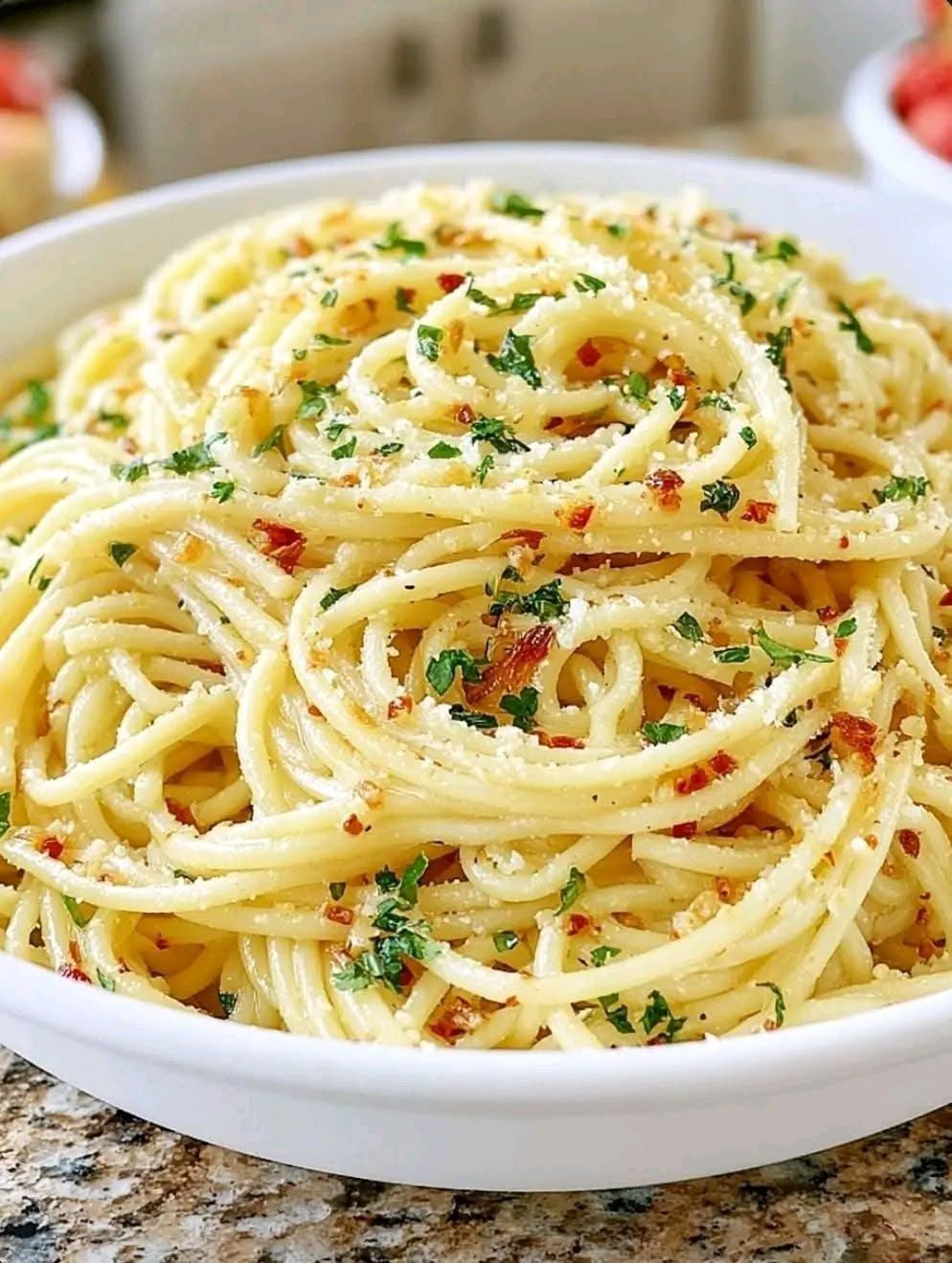
There are few dishes in the world that embody the beauty of simplicity quite like Spaghetti Aglio e Olio. This humble Italian classic, which translates to “spaghetti with garlic and oil,” is proof that you do not need a long list of ingredients or complicated techniques to create something truly extraordinary. With just a handful of pantry staples—pasta, garlic, olive oil, and a pinch of red pepper—you can craft a dish that is deeply flavorful, satisfying, and utterly elegant. It is the kind of meal that feels like a warm embrace on a chilly evening, the kind that transports you to a small trattoria in Rome with every single bite. This is the pasta that every home cook should know by heart, a recipe that has stood the test of time for good reason.
For the Spaghetti Aglio e Olio
-
1 pound spaghetti (or any long pasta, such as linguine or fettuccine)
-
½ cup extra virgin olive oil (the best quality you have, as it is the star of the dish)
-
6 to 8 cloves garlic, thinly sliced (not minced—slices give a more delicate flavor)
-
½ teaspoon red pepper flakes (or more, if you like heat)
-
1 teaspoon salt, plus more for the pasta water
-
¼ cup fresh parsley, finely chopped (for freshness and color)
-
½ cup grated Parmesan cheese (optional, though many purists skip it)
-
Freshly ground black pepper, to taste
-
½ cup pasta cooking water, reserved
The Foundation
Begin by bringing a large pot of generously salted water to a rolling boil. The water should taste like the sea—this is your only chance to season the pasta from the inside out. Once it reaches a boil, add the spaghetti and cook it until it is al dente, about one minute less than the package instructions. The pasta will continue to cook in the sauce, so slightly undercooking it ensures it remains perfectly tender.
While the pasta is cooking, heat the extra virgin olive oil in a large, heavy-bottomed skillet or sauté pan over medium-low heat. The key to this dish is gentle heat—you want to coax the flavor out of the garlic without burning it. Add the sliced garlic and red pepper flakes to the oil and cook them slowly, stirring occasionally, for about three to five minutes, until the garlic is just barely golden and fragrant. The garlic should be soft and translucent, not browned or crispy, which would make it bitter.
Bringing It Together
When the pasta is ready, use tongs or a spider strainer to transfer the cooked spaghetti directly from the pot into the skillet with the garlic and oil. Alternatively, you can drain the pasta, but be sure to reserve about a half-cup of the starchy pasta water first.
Toss the spaghetti in the garlic oil, letting it coat every strand. Add the reserved pasta water a splash at a time, tossing vigorously—this is where the magic happens. The starch in the water, combined with the oil, creates a silky, emulsified sauce that clings beautifully to the pasta.
Sprinkle in the salt, and continue tossing until the sauce has come together and the pasta is perfectly coated and glossy. Remove the skillet from the heat and stir in the chopped fresh parsley, which adds a bright, herbaceous note that cuts through the richness of the oil and garlic.
Serving and Savoring
Serve the spaghetti hot, in warmed bowls, with a generous crack of freshly ground black pepper over the top. If you are adding Parmesan, sprinkle it over the individual portions, though many traditionalists will tell you that cheese is not part of the authentic Aglio e Olio experience—the choice is entirely yours.
This dish is best enjoyed immediately, while the pasta is still hot and the sauce is at its silky peak. A simple side salad or a glass of crisp white wine, such as Pinot Grigio or Vermentino, makes a lovely accompaniment, though this pasta truly needs nothing else to shine.
Storing and Reheating
Leftovers can be stored in an airtight container in the refrigerator for up to two days. To reheat, warm the pasta gently in a skillet over low heat with a splash of water or olive oil to revive the sauce—the microwave can make the pasta dry, so the stovetop method is highly recommended.
A Few Grace Notes
This recipe is a beautiful canvas for improvisation. If you love heat, add a little extra red pepper flakes for a spicy kick. For a richer flavor, you can add a handful of halved cherry tomatoes to the skillet just before tossing with the pasta, letting them soften and burst into the sauce. A squeeze of fresh lemon juice over the finished dish adds a bright, zesty lift.
If you have fresh herbs on hand, you can swap the parsley for fresh basil or oregano, or add a sprinkle of lemon zest for extra brightness. For a more decadent version, top the finished pasta with buttered breadcrumbs for a delightful crunch.
Spaghetti Aglio e Olio is a testament to the philosophy that less is more. With its simple, high-quality ingredients and a few thoughtful techniques, it is a dish that feels both humble and extraordinary. It is the kind of recipe that will become a staple in your kitchen, the one you turn to when you need something quick, comforting, and deeply satisfying. Buon appetito!