
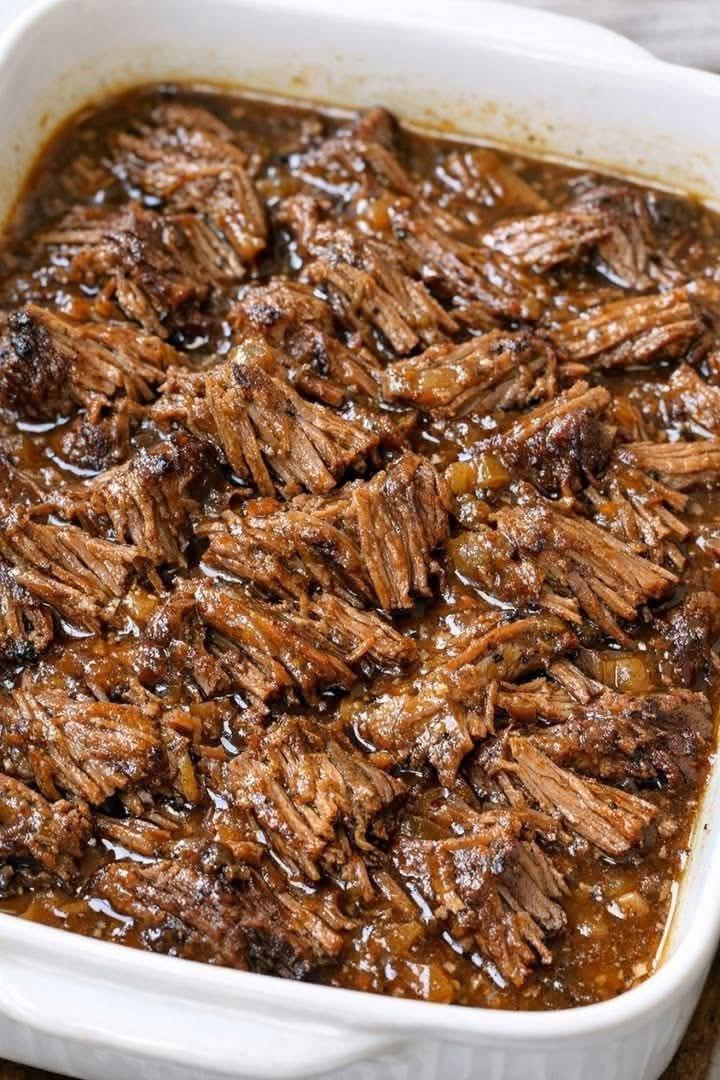
Ingredients
One beef chuck roast (three to four pounds), one packet (1 ounce) dry onion soup mix (Lipton or store brand), one can (10.5 ounces) condensed cream of mushroom soup, and half cup water or beef broth (optional, for extra gravy). Optional garnish: fresh parsley or thyme.
Equipment Needed
A large Dutch oven or heavy-bottomed pot with a tight-fitting lid (or a roasting pan covered tightly with foil), a small bowl or measuring cup, a whisk or fork, tongs, a meat thermometer, and a spoon for skimming fat.
Method
Preheat your oven to 165°C (325°F).
Pat the chuck roast completely dry with paper towels. This step helps the seasoning adhere and promotes better browning (even though you are not searing, dry meat cooks more evenly).
In a small bowl or measuring cup, whisk together the dry onion soup mix, cream of mushroom soup, and water or broth if using, until smooth.
Place the chuck roast in a Dutch oven or roasting pan. Pour the soup mixture over the roast, turning to coat all sides. The sauce will pool around the bottom.
Cover the pot tightly with its lid (or tightly with heavy-duty aluminum foil if your roasting pan does not have a lid). The seal must be tight to trap steam.
Bake for three to four hours, until the roast is fork-tender and shreds easily. A meat thermometer inserted into the thickest part should read at least 85°C to 93°C (185°F to 200°F) for fall-apart texture. Do not rush—the long, slow cooking is what breaks down the connective tissue.
Carefully remove the pot from the oven. Transfer the roast to a cutting board or serving platter. Let it rest for ten to fifteen minutes before slicing or shredding.
If the gravy seems thin, skim off any excess fat from the surface, then pour the liquid into a small saucepan and simmer for five to ten minutes until thickened. Alternatively, whisk in a slurry of one tablespoon cornstarch mixed with two tablespoons cold water and simmer until thickened.
Slice the roast against the grain (across the muscle fibers) or shred it with two forks. Serve with the gravy spooned generously over the top. Garnish with fresh parsley or thyme.
Storage
Refrigerate in an airtight container for up to five days. The flavor improves overnight. Reheat gently on the stovetop or in the microwave. Freeze for up to three months. Thaw overnight in the refrigerator before reheating.
Variations
For a mushroom lovers version, add eight ounces of sliced cremini mushrooms to the pot before baking. For a garlic version, add four cloves of minced garlic to the soup mixture. For a red wine version, replace the water or broth with half a cup of dry red wine (Merlot or Cabernet). For a vegetable version, add chopped carrots, onions, and celery around the roast before baking. For a low-carb version, this recipe is already low-carb—just serve with cauliflower mash instead of potatoes. For an Instant Pot version, cook on HIGH pressure for seventy to ninety minutes with a natural release of twenty minutes. For a slow cooker version, cook on LOW for eight to ten hours or on HIGH for five to six hours.
Serving Suggestions
Serve over creamy mashed potatoes to soak up every drop of gravy. Pair with buttered egg noodles or white rice. Serve alongside roasted carrots, green beans, or a simple green salad. Use the shredded meat for sandwiches on soft rolls with provolone cheese. Spoon the gravy over crusty bread. Top with fresh parsley or chives.
Tips for Best Results
Use beef chuck roast, not a lean cut. Chuck roast has the fat and connective tissue needed to become tender during long, slow cooking. Lean cuts like round or sirloin will become dry and tough. The fat marbles throughout the chuck and melts as it cooks, basting the meat from the inside.
Do not add extra salt. The dry onion soup mix and cream of mushroom soup are both very salty. Taste the gravy before adding any additional salt. You probably will not need any.
Do not skip patting the roast dry. Excess moisture on the surface creates steam instead of allowing the meat to develop a nice crust (even though you are not searing, a dry surface still promotes better texture). Use paper towels to blot the roast completely before adding the sauce.
Seal the pot tightly. The trapped steam is what keeps the roast moist and helps it become tender. A loose lid lets steam escape, and the meat can dry out. If your pot lid does not fit tightly, use heavy-duty aluminum foil to seal it.
Do not rush the cooking time. Three to four hours at 165°C (325°F) is the minimum. Chuck needs time for collagen to break down into gelatin. If the roast is still tough at three hours, cover it again and bake for another thirty minutes. Patience pays off.
Let the roast rest before slicing. Ten to fifteen minutes off the heat allows the juices to redistribute throughout the meat. Slicing immediately releases all those juices onto the cutting board, leaving you with dry meat.
Skim the fat before serving. Chuck roast releases a significant amount of fat during cooking. A visible layer of fat may float on top of the gravy. Spoon it off or use a fat separator before thickening and serving.
Shred the meat for sandwiches or tacos. This pot roast is so tender it practically shreds itself. Use two forks to pull the meat apart and pile it onto soft rolls with cheese and pickles. It also makes amazing tacos with avocado and salsa.
Make it a day ahead for even better flavor. Like most braised dishes, this pot roast tastes even better the next day after the flavors have melded. Prepare, cool, and refrigerate overnight. The next day, skim the solidified fat from the surface and reheat gently.
Save the gravy. The liquid left after the roast is gone is liquid gold. Strain it and store it in the refrigerator. The fat will solidify on top, leaving a rich, flavorful gravy underneath. Use it to top mashed potatoes, roast vegetables, or as a dipping sauce for bread. It also makes an incredible base for beef soup.